Recap on Meta.
Why shorting Meta is beginning to be successful.
It’s been one week since I entered a short on Meta at $740 a share. Yesterday it closed for the weekend at around $709. Below I’ll walk through what I think the market is starting to price in, because it gets to the core of why I took this trade.
The model below breaks out Meta’s quarterly capital expenditure, its revenue, and where that revenue comes from. I’m showing these numbers because together they paint a picture of where Meta could be over the next two years. Two assumptions drive the model. First, capex growth slows sharply. Spend still climbs in absolute terms, from $137.5B in 2026 to $175B in 2027, but the growth rate drops from 90% to 27%. Even so, capex stays at roughly 55–60% of revenue, a level that only makes sense if the revenue behind it keeps compounding. Second, digital advertising, which is essentially all of Meta’s business at 98% of revenue, begins to lose share and decelerate, with growth falling from 25% in 2026 to 18% in 2027.
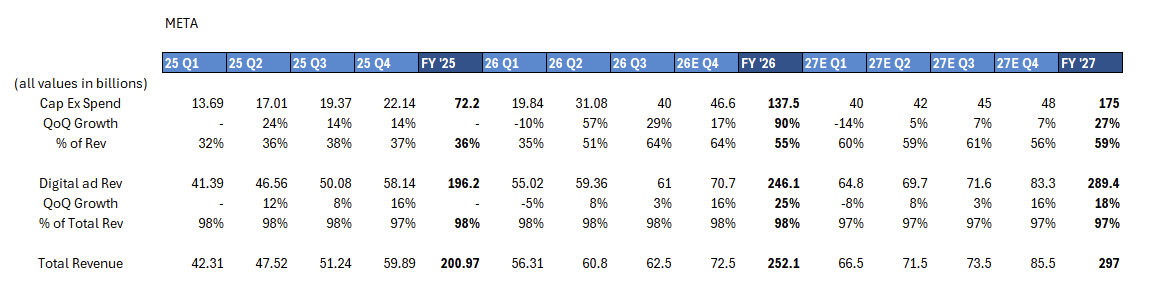
Let me explain why I expect ad revenue to slow. Digital advertising is starting to shift toward AI. More and more, a business’s visibility, and ultimately its sales, won’t come from running ads on social media. They’ll come from being recommended by AI agents. Consumers are already using AI to shop, asking their agents to build lists, compare options, or name the best product in a category. Those agents don’t pull from ads. They pull from what the internet says: Yelp reviews, Reddit threads, news coverage, and other third-party sources they treat as credible. A brand that keeps flooding consumer feeds with ads won’t convert the way it used to if the agent making the recommendation never sees those ads.
The logical result is that marketing budgets start moving. Dollars that would have gone to Meta’s ad platforms shift toward building a genuine reputation online: earning reviews, showing up positively in discussion threads, and getting covered by sources AI models trust. Established luxury brands will likely be insulated, since their demand is driven by brand equity rather than discovery. The real turning point is for everyday products and mid-market brands, the businesses that depend most on being found, and the same ones that make up the bulk of Meta’s advertiser base.
Meta is committing more capital than ever at the exact moment the core business funding it could be losing its grip on the customer.
Thanks for reading. Until next time.
Articles published every Saturday and Sunday.
Comments
Sign in to comment and give a thumbs up.